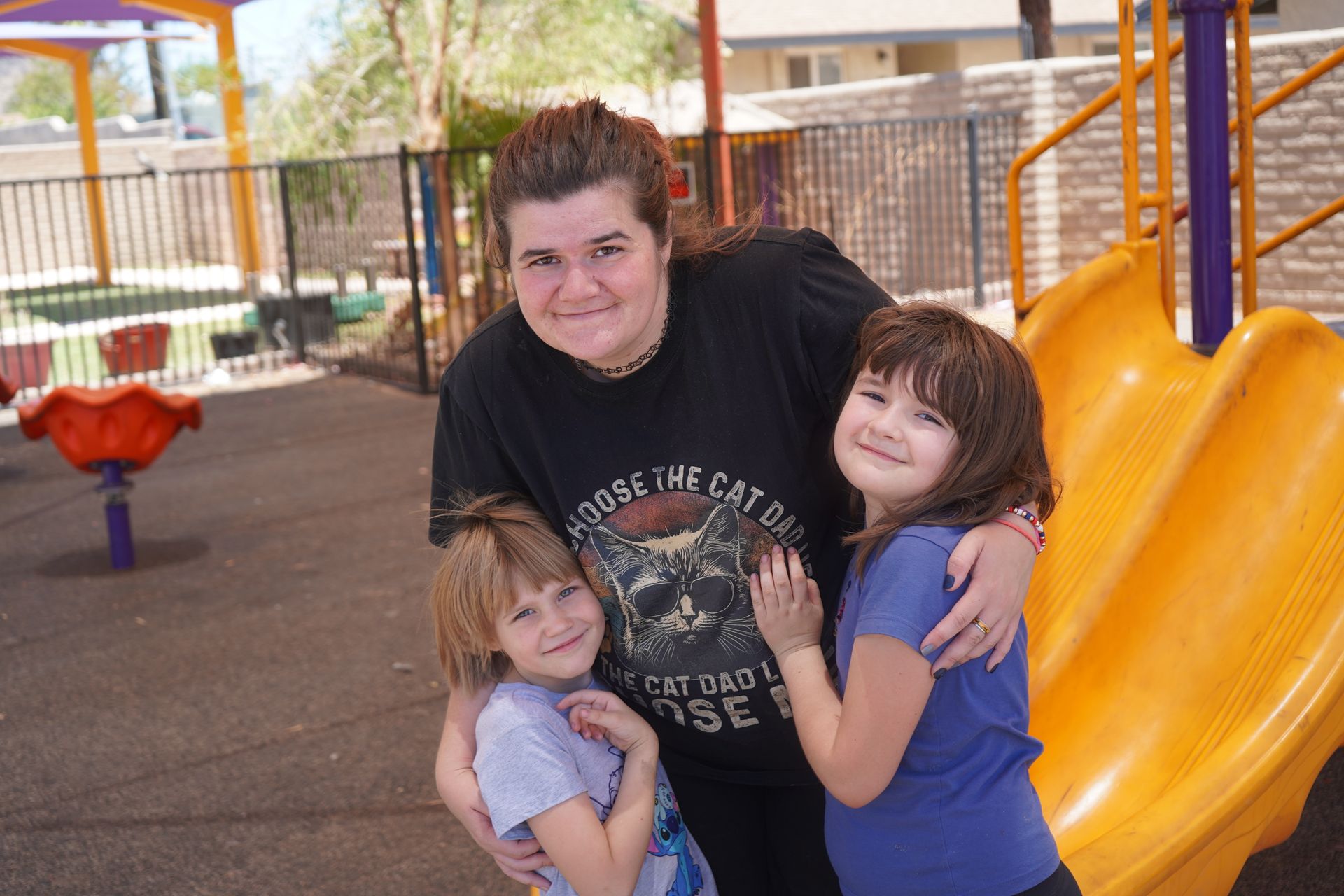
When Ashley arrived in Phoenix, she wasn't simply looking for a place to sleep. She was searching for safety.
After leaving a home where she and her children no longer felt safe. Ashley had no choice, but to start over with her two young children. Like many families experiencing homelessness, her journey wasn't a straight path. She was moved from one emergency shelter to the next, never knowing where they would stay next or when their time would be up.
“Leaving home was the hardest decision I've ever made. But watching my child wonder where we would sleep each night was even harder.” — Ashley, Vista Colina Client
At one point, Ashley entered CASS' Family Crisis Unit, where families could stay for up to 14 days
while working through Maricopa County's Coordinated Entry process.
Family shelter placement is not immediate. After completing an assessment, families are added to a countywide waitlist. Each day, family shelters contact the next eligible families on the list until all available units are filled.
For parents experiencing homelessness, 14 days was often still not enough time to stabilize their family, navigate available resources, and begin resolving the barriers that had led to homelessness. Many families reached the end of their emergency stay before a shelter opening became available, forcing them to return to an already unstable situation while continuing to wait for their opportunity.
Before Ashley's 14 days were over, she was fortunate to transition into
Vista Colina, CASS' family shelter program, where families receive longer-term support, stable shelter, and intensive case management.
That additional time changed everything.
Homelessness is rarely the result of a single event. For many families, it is the culmination of months or even years of financial hardship, domestic violence, medical challenges, job loss, rising housing costs, or other life-altering circumstances.
As Ashley worked with her case manager, it became clear that her family's challenges extended far beyond finding a roof over their heads.
For months, she struggled to reinstate her SNAP benefits after difficulties verifying her household. Without those benefits, providing consistent meals became increasingly difficult.
Like many parents experiencing homelessness, the challenges Ashley faced began long before she lost her housing. Financial instability, trauma, domestic violence, limited access to healthcare, interrupted education, and poverty often affected her family for generations.
Solving these challenges requires more than emergency shelter. It requires time, trust, and consistent support.
With the stability provided through Vista Colina, Ashley is working alongside her case manager to navigate benefit systems, secure resources, and create a plan for long-term stability for herself and her children.
Today, families entering our emergency family shelter can stay for up to 30 days, rather than just 14.Those additional 16 days provide families with something that is often in short supply during a housing crisis: time.
- Time to replace important documents.
- Time to enroll children in school.
- Time to reconnect with public benefits.
- Time to attend housing appointments and employment interviews.
- Time to build trust with a case manager who can help navigate the complex systems designed to support them.
For many families, those extra 16 days can mean the difference between returning to homelessness and taking meaningful steps toward permanent housing.
Vista Colina gives families the opportunity to stabilize, rebuild, and begin breaking the cycles of homelessness that can impact families for generations. Because when families are given the right opportunity not just to survive, they thrive.